
Research
Investigating the crosstalk between microbes, neurons, and immune cells
The ability to sense and respond to harmful stimuli is critical for host defense and tissue homeostasis. The nervous system plays an important role in detecting exogenous threats and coordinating protective host responses. The Deng Lab combines microbiology, neurobiology, and immunology approaches to study microbe-neuroimmune interactions. Understanding how neurons detect and respond to microbes will reveal novel mechanisms of host defense as well as therapeutic targets to treat infectious disease and neuropathic conditions.
Research themes
Role of itch in host defense
Spontaneous itch recording of mice
Our work has shown, for the first time, that bacteria can directly drive itch and scratching to exacerbate skin damage. We discovered the Staphylococcus aureus activates itch neurons during epicutaneous exposure. Current work in the Deng Lab seeks to identify other microbial triggers of itch and to understand how itch and scratching impact skin inflammation and bacterial pathogenesis.
How microbes shape neuroimmune function
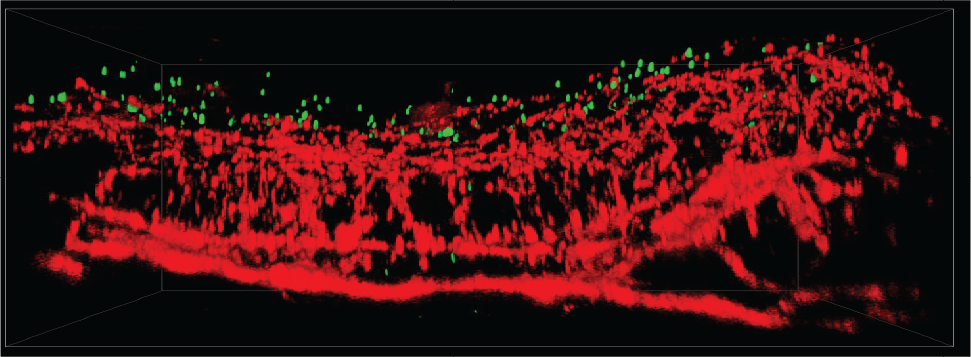
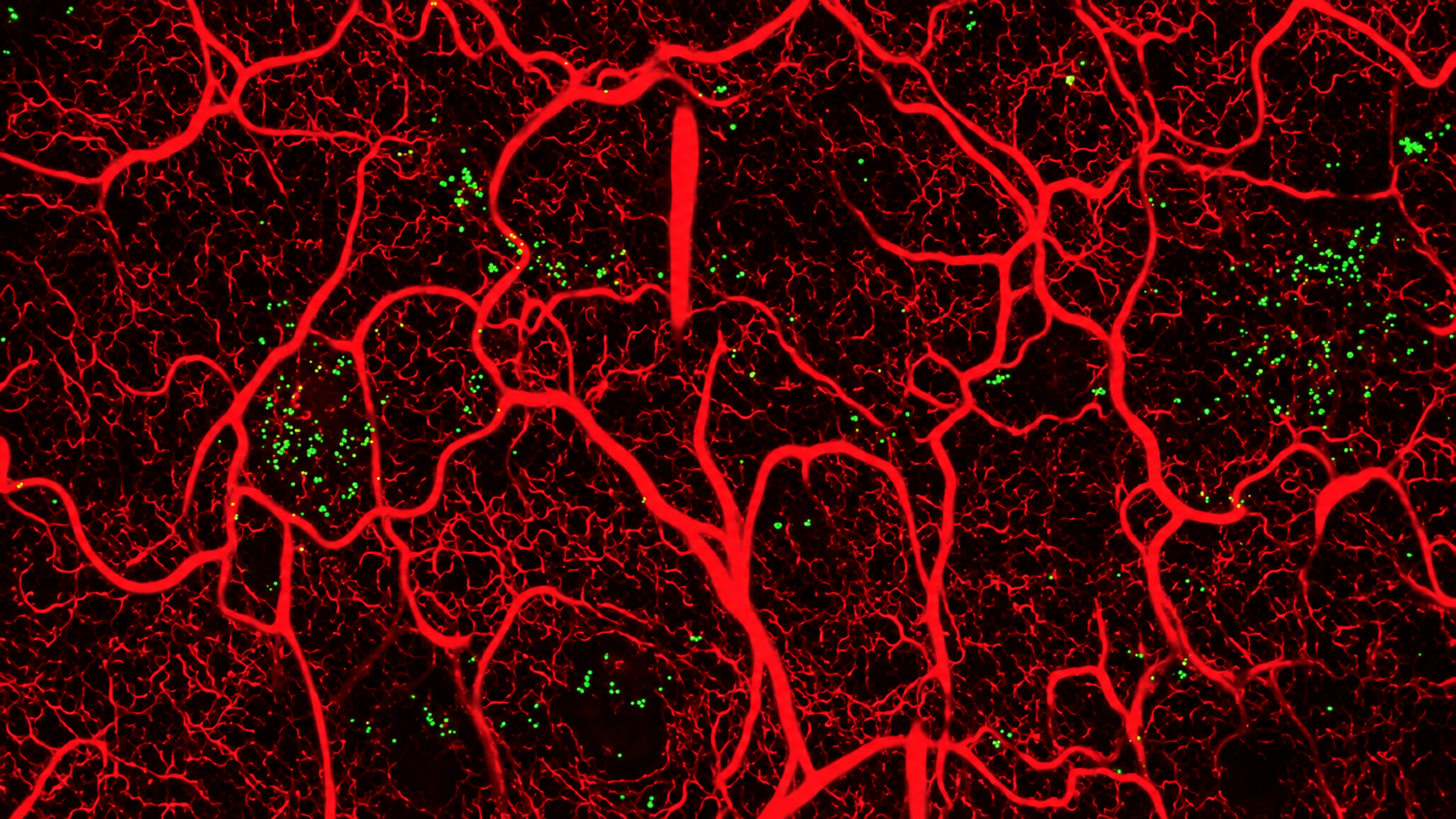
Skin sensory neurons (red) and S. aureus (green)
It is now widely appreciated that neurons can directly sense and respond acutely to microbial signals. However, how microbes shape neuron innervation and activity is currently not well-understood. The Deng Lab is investigating the long-term impact of microbes on somatosensation and neuroimmune signaling.
Noxious sensations and infection
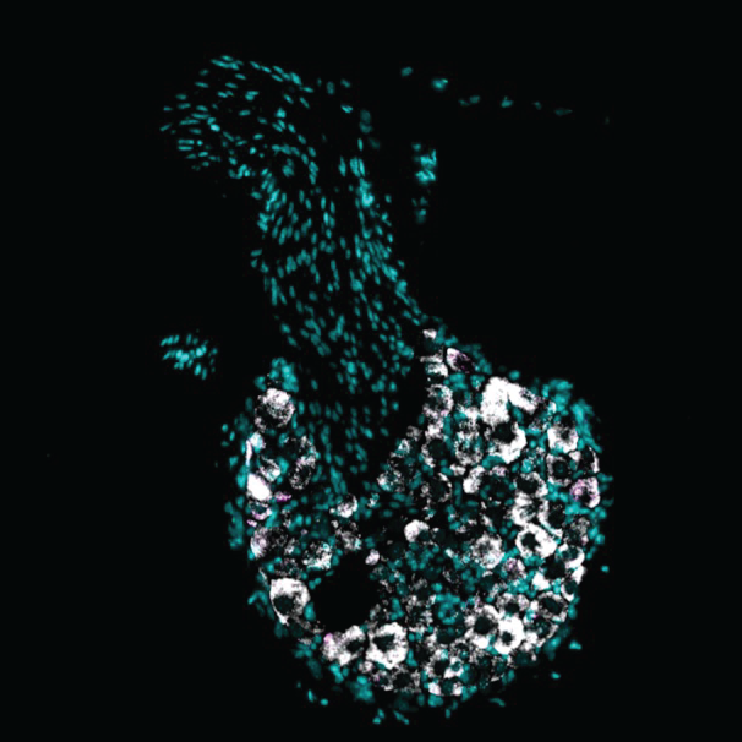
Dorsal root ganglion
Infections are associated with a wide range of symptoms (e.g. itch, pain, sneezing, coughing, nausea). These behavioral responses are mediated by the nervous system. The Deng Lab aims to understand how microbes mediate noxious sensations at different host barriers, how these responses shape immunity, and whether behavioral reflexes impact bacterial virulence or transmission.
Research in the Deng Lab is generously supported by an NIH/NIAMS K99/R00 award.